
19th May 2026

The Role of Sensors in Closed-Loop Automation Systems

The Role of Sensors in Closed-Loop Automation Systems

Modern automation relies on far more than programmed instructions. For a machine or system to respond intelligently to what is actually happening, it needs a continuous flow of accurate data. That is the foundation of closed-loop automation, and sensors are what make it possible.
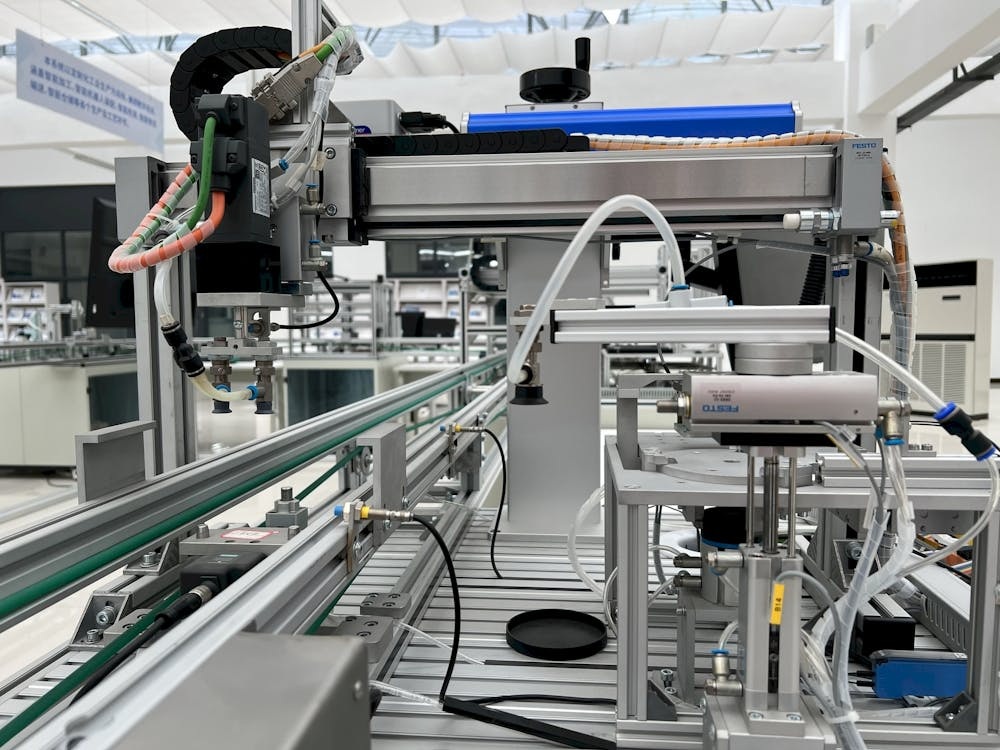
Open-Loop Vs Closed-Loop Systems

In an open-loop system, a controller sends a command and assumes it has been carried out correctly. There is no verification, no feedback and no mechanism to detect or correct errors. For simple, low-stakes tasks this can be adequate, but in demanding industrial environments it leaves too much to chance.

A closed-loop system works differently. It monitors its own output through sensors, compares that output against a target value and adjusts its behaviour accordingly. This is feedback control in practice. The result is a system that can compensate for variables in real time, whether that is a fluctuation in load, a temperature shift or a mechanical deviation it was not programmed to expect.

This self-correcting capability is what makes closed-loop automation essential in applications where precision, consistency and reliability are non-negotiable.

Where Sensors Fit In

Sensors are the measurement layer of a closed-loop system. They translate physical conditions, such as position, pressure, speed, temperature and force, into electrical signals that a controller can read and act on. Without accurate, reliable sensing at this stage, the rest of the control logic has nothing meaningful to work with.

The type of sensor used depends entirely on what needs to be measured. In a robotic assembly line, position sensors track the precise location of moving components throughout each cycle. In a hydraulic system, pressure sensors ensure operating limits are maintained. In conveyor or motion control applications linear displacement sensors confirm that movements have completed correctly before the next stage begins.

What each of these shares is a role as the system’s primary source of truth, reporting real-world conditions back to the controller.

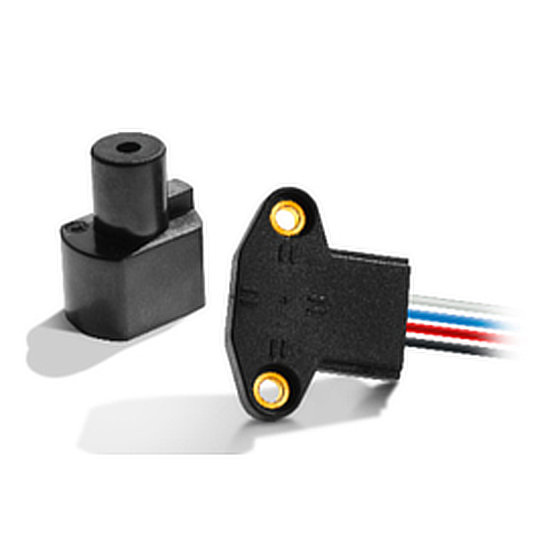
ZF, ANG Sensor

Angle and Linear Position Sensors

Angle and linear position sensors play a central role in many closed-loop automation applications. Both serve the same fundamental purpose, measuring where something is, but they do so in different dimensions.

Angle position sensors measure rotational movement, making them well suited to applications involving shafts, joints, valves and anything that pivots or rotates. Linear position sensors measure displacement along a straight axis, which is essential in motion control applications where an object moves between defined points.

Pressure Sensors

Pressure sensors serve a different but equally critical function. In systems that work with liquids, gases or steam, pressure measurement feeds directly into the control loop. It tells the system whether flow rates, containment levels and operating conditions are within specification.

In manufacturing, this might mean monitoring hydraulic pressure in a press or clamping mechanism. In pneumatic automation, it could be verifying that actuators are reaching their target pressure before triggering the next stage. In process environments, such as chemical processing or food production, it supports safe operation by identifying problems early, before they escalate. 

The breadth of applications that rely on pressure sensing reflects how fundamental it is to closed-loop control. Across automotive, aerospace, HVAC, healthcare and general industrial automation, accurate pressure data is one of the core inputs that allows a system to self-regulate rather than simply execute.

Choosing the Right Sensor for the Application

Sensor selection has a direct impact on how well a closed-loop system performs. A sensor that is not rated for its operating environment, or that lacks the resolution the control system requires, will introduce error into the feedback loop. This is regardless of how well everything else is specified.

Key considerations include:

  • The measurement range and resolution needed
  • The operating environment including temperature, ingress protection, vibration
  • The output signal type required by the controller
  • The expected service life relative to maintenance schedules.

Getting these decisions right at the specification stage avoids performance issues that are considerably harder and more expensive to resolve once a system is in production.

Supporting Your Automation Projects

Live Electronics supplies a range of sensors suited to closed-loop automation applications, including angle position sensors, linear position sensors and pressure sensors.

Our angle and linear position sensors from ZF use Hall Effect technology, which removes the need for physical contact between moving parts. This avoids the mechanical wear that affects traditional contact-based designs, maintaining accuracy over a far longer service life. In industrial environments where replacement or recalibration is costly and disruptive, that longevity is a reliability requirement as much as a performance one.

Alongside the components themselves, our technical team is available to support specification decisions, helping you identify the right sensor for your application before any purchase is made. If you are working on an automation project and want to discuss sensor selection, contact us directly. We aim to respond the same day and can provide a quote within 24 hours.